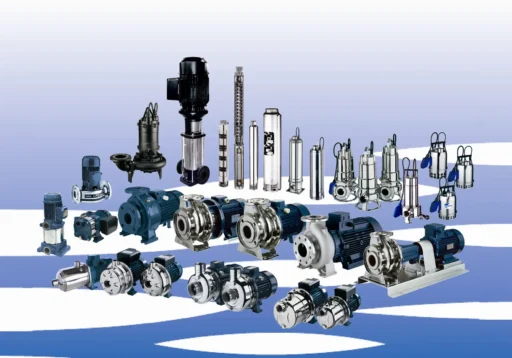
It goes without saying that not all pumps are built for the same task.
For example, a pump that works perfectly in a family home wouldn’t stand much chance of keeping up with a busy hotel or office building. Equally, fitting a large commercial pump into a domestic system would be expensive, unnecessary, and far more powerful than the application demands.
So, how do you know which type you need?
Whether you’re replacing an existing pump or planning a new installation, understanding the difference between domestic and commercial pumps will help you choose the right pump the first time.
What Is a Domestic Pump?
Domestic pumps are designed for homes and small residential properties.
They’re built to provide the right amount of water pressure and flow for everyday household use without taking up too much space or using unnecessary amounts of energy.
You’ll commonly find domestic pumps being used for:
- Boosting shower pressure
- Hot water circulation
- Central heating systems
- Small water pressure boosting systems
- Garden irrigation
Because they’re designed for smaller systems, domestic pumps are usually compact, quiet, and simple to install.
They’re ideal for properties where water demand is fairly consistent throughout the day.
What Is a Commercial Pump?
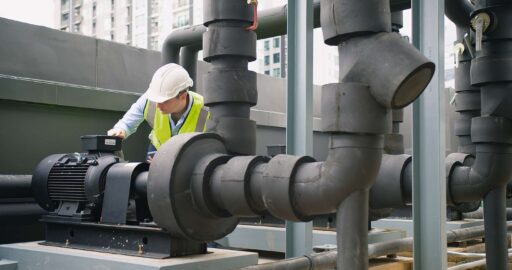
Commercial pumps are built for much larger systems where demand is significantly higher.
Instead of supplying one home, they may be responsible for providing water to entire buildings or multiple users at the same time.
Typical commercial applications include:
- Office buildings
- Schools and universities
- Hotels
- Hospitals
- Apartment blocks
- Industrial facilities
These pumps are designed to operate for longer periods, move larger volumes of water, and cope with changing demand throughout the day.
Many also include advanced controls to improve efficiency and maintain consistent performance.
The Biggest Difference? Capacity.
The main difference between domestic and commercial pumps is how much water they can move.
A domestic pump is designed to supply a relatively small number of outlets.
A commercial pump may need to supply dozens (or even hundreds) of taps, showers, appliances, or heating systems simultaneously.
Choosing the wrong size pump can lead to problems down the line.
For example, a pump that’s too small may struggle to keep up with demand, while one that’s too large could waste energy and cost more than necessary to run.
The goal is always to match the pump to the system—not simply buy the biggest model available.
Installation Is Very Different
Domestic pumps are generally quick and straightforward to install.
They’re often fitted in airing cupboards, utility rooms, or under sinks where space is tight.
However, commercial pumps are a different story. Because they’re larger and designed for more demanding applications, installations often require:
- Dedicated plant rooms
- Three-phase electrical supplies
- Isolation valves and bypasses
- Additional controls and monitoring equipment
- Easy access for servicing and maintenance
What About Running Costs?
Buying the pump is only part of the overall cost.
The amount of electricity it uses throughout its lifetime can often have a much bigger impact.
Domestic pumps generally consume less energy because they’re smaller and operate for shorter periods.
Commercial pumps often run continuously, making efficiency a much bigger priority.
Many commercial systems use variable speed technology, allowing the pump to adjust its output depending on demand. This helps reduce energy consumption and keeps long-term operating costs under control.
So… the Big Question: Which Pump Do You Need?
If you’re unsure whether a domestic or commercial pump is right for your project, ask yourself a few simple questions.
Is it for a home?
If you’re supplying a single property or small residential system, a domestic pump will usually be the right choice.
Will lots of people use water at the same time?
If the answer is yes, you’ll probably need a commercial solution capable of handling higher demand.
Does the system run continuously?
Commercial pumps are designed for longer operating hours and heavier workloads.
Is future expansion likely?
It’s worth considering whether demand could increase later, especially for commercial properties.
Domestic vs Commercial Pumps at a Glance
| Domestic Pumps | Commercial Pumps |
|---|---|
| Designed for homes | Designed for larger buildings |
| Lower flow rates | Higher flow rates |
| Compact and quiet | Larger and more powerful |
| Straightforward installation | More complex installations |
| Simple controls | Advanced monitoring and controls |
| Lower running demands | Built for continuous operation |
Choosing the Right Pump Matters
It can be tempting to assume that a bigger pump means better performance… but that’s rarely the case.
A pump should always be matched to the application it’s serving.
Choosing the right pump helps improve efficiency, reduce running costs, extend equipment life, and avoid performance issues further down the line.
Whether you’re buying for a home, a commercial property, or something in between, understanding the difference between domestic and commercial pumps is the first step towards getting it right.