Pumps do a pretty simple job: they move things from one place to another.
But the second you start looking at pump specifications, installation guides, or technical information, things can get a little more complicated.
Head? Flow rate? Cavitation? Duty point?
Suddenly it feels like pumps have their own language.
The good news? Once you understand a few key terms, choosing, using, and looking after a pump becomes much easier.
So, here’s our A-Z guide to the world of pump terminology (without the unnecessary confusion).
A
Air Lock – An air lock happens when air becomes trapped in a pump or pipework, preventing fluid from moving properly. It can lead to reduced performance, loss of prime, or a pump that simply refuses to cooperate.
Accumulator – An accumulator is a pressure storage vessel that holds water under pressure. It helps reduce how often a pump starts and stops, helping improve efficiency and reduce wear.
Auxiliary Pump – A secondary pump used to support the main system. This could be for backup, increased capacity, or when different areas of a system need additional support.
B
Bearing – Bearings support the rotating shaft inside a pump and help it move smoothly. A worn bearing can lead to vibration, noise, and reduced pump life.
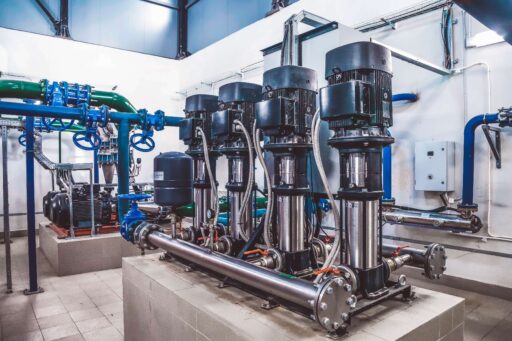
Booster Set – A booster set increases water pressure where the existing supply isn’t quite enough. They’re often used in buildings, water systems, and applications where maintaining pressure is important.
Backflow – Backflow happens when fluid moves in the wrong direction. Check valves and other protective components help prevent this from affecting pump performance.
C
Cavitation – Cavitation occurs when pressure inside a pump drops low enough for vapour bubbles to form. When those bubbles collapse, they can cause noise, vibration, and damage. A properly selected pump helps avoid this issue.
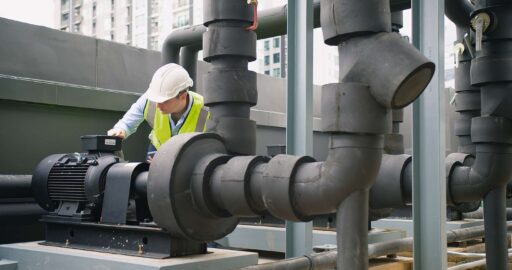
Centrifugal Pump – A centrifugal pump uses a rotating impeller to move fluid. They’re one of the most common pump types and are widely used for water and industrial applications. They work by controlling the flow of water, helping you use less without making your shower feel any different.
Check Valve – A check valve allows fluid to flow one way but prevents it from flowing back. Simple, but extremely important for protecting systems.
D
Duty Point – The duty point is where a pump operates based on flow rate and pressure requirements. Choosing the correct duty point helps ensure the pump does its job efficiently.
Diaphragm Pump – A diaphragm pump uses a flexible membrane to move fluid. They’re often used where fluids are abrasive, sensitive, or contain solids.
Discharge – The discharge is the outlet side of the pump where fluid leaves and enters the system.
E
Efficiency – Pump efficiency describes how well a pump converts energy into useful movement. A correctly sized pump can save energy, reduce costs, and last longer.
End Suction Pump – A common centrifugal pump design where fluid enters through the end and exits through the top. Often found in heating, water supply, and commercial applications.
F
Flow Rate – Flow rate tells you how much fluid a pump can move over a set period. It’s usually measured in litres per minute (L/min), litres per second (L/s), or cubic metres per hour (m³/h).
Float Switch – A float switch detects liquid levels and can automatically start or stop a pump. Commonly used in drainage and wastewater applications.
G
Gear Pump – A positive displacement pump that uses rotating gears to move fluid. They’re often used for oils, fuels, and thicker liquids.
Gauge Pressure – The pressure shown on a gauge, usually measured compared with atmospheric pressure.
H
Head – Head is a measurement of pressure. Usually measured in metres, it tells you how much resistance the pump can overcome; it doesn’t mean the physical height of the pump. A higher head means the pump can push fluid against greater resistance.
Hydraulic Pump – A pump designed to move hydraulic fluid and create power within hydraulic systems.
I
Impeller – The impeller is the spinning part inside many pumps. Its job is to transfer energy into the fluid, creating movement and pressure. Different impellers are designed for different jobs, from clean water to fluids containing solids.
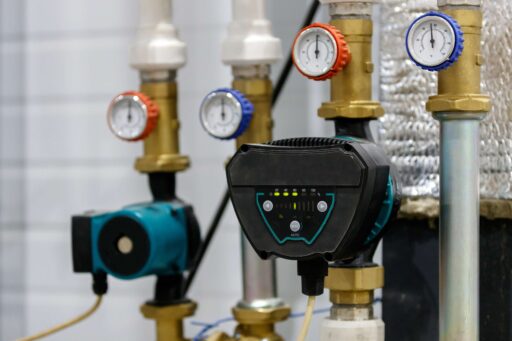
Inline Pump – A pump where the inlet and outlet are aligned. They’re popular where installation space is limited.
J
Jet Pump – A jet pump uses a high-speed stream of fluid to help create suction and move water. They’re commonly used in applications such as wells and water supply systems.
K
Kinetic Energy – The energy created by movement. In pumps, the impeller converts kinetic energy into pressure.
L
Lift – The vertical distance a pump needs to move fluid. The higher the lift, the more pressure the pump needs to produce.
LPM – Litres per minute is a common measurement for pump flow rate.
M
Mechanical Seal – A seal that prevents fluid from leaking around the rotating shaft. A small component that plays a big role in pump reliability.
Motor – The part of the pump system that provides the power needed to operate.
N
NPSH – Net Positive Suction Head is used to check whether a pump has enough pressure at the suction side. Getting it wrong can lead to cavitation.
NPSHa / NPSHr – Available versus required suction head. The available amount must be higher than what the pump requires.
O
Overload – When a pump operates beyond its intended limits. This can increase wear, energy use, and the chance of failure.
Outlet Pressure – The pressure measured where fluid leaves the pump.
P
Priming – The process of filling a pump with fluid before operation. Some pumps need manual priming, while others can prime themselves.
Pump Curve – A graph showing how a pump performs at different flow rates and pressures. Used to help select the right pump.
Q
Quality – A good pump isn’t just about price. It’s about choosing reliable equipment that matches the job it needs to do.
R
Run Dry – When a pump operates without fluid. Because many pumps rely on the pumped liquid for cooling and lubrication, running dry can cause damage.
Recirculation – Redirecting fluid through part of the system to maintain flow or protect the pump.
S
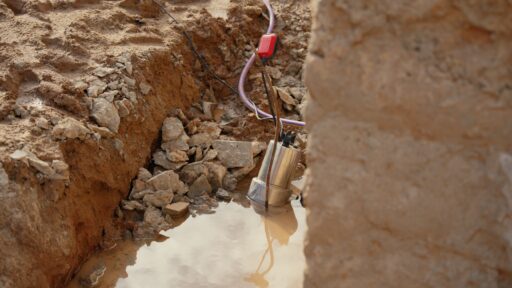
Submersible Pump – A pump designed to operate underwater. Commonly used for drainage, wastewater, and floodwater removal.
Suction – The inlet side of a pump where fluid enters.
T
Total Dynamic Head (TDH) – The total resistance a pump must overcome, including height, friction, and pressure requirements.
Transfer Pump – A pump designed to move fluid from one location to another.
U
Utility Pump – A general-purpose pump used for moving water in everyday applications.
Uncoupling – Disconnecting the pump from its motor or drive for maintenance.
V
Variable Speed Drive (VSD) – A device that controls pump speed to match demand. It can improve efficiency and reduce unnecessary energy use.
Viscosity – A measurement of how easily a fluid flows. Thicker fluids usually require more pumping power.
W
Water Hammer – A pressure shock caused by sudden changes in fluid movement. It can create noise, vibration, and stress on pipework.
Wear Ring – A replaceable part that reduces wear between the impeller and casing.
Y
Yield – The useful output achieved compared with the energy or effort put into a system. In pumps, this links closely with efficiency.
Z
Zero Flow – When a pump is running but no fluid is moving. This can happen because of closed valves, blockages, or incorrect setup.
There’s More to Pump Terminology Than This…
This guide covers some of the most common pump terms you’re likely to come across, but the world of pumps goes much further.
Depending on the type of pump, industry, and application, you may come across plenty of other terminology — from specific components and materials to performance measurements and installation requirements.
Not sure what a term means? Don’t guess.
The wrong pump choice or misunderstanding a specification can lead to poor performance, unnecessary energy use, or problems further down the line.
If you’re unsure about a pump term, need help choosing the right equipment, or just want someone to explain things in plain English, our team is always happy to help.
Because when it comes to pumps, understanding the language is the first step to getting the right solution.
13,000+ Products at Your Fingertips
With a wide range of pumps available and stock ready to go, Pumpify makes it easier to find the right solution for your system. Shop our range today, or get in touch if you need help finding the perfect pump for the job.