Choosing a pump isn’t just about picking the one with the biggest performance figures.
One of the most common decisions you’ll face is whether to go for a variable-speed pump or a fixed-speed pump.
Variable-speed pumps often get a lot of attention (and for good reason). They can improve efficiency, reduce energy consumption, and adapt to changing demand.
But that doesn’t automatically make them the right choice for every system.
Sometimes a fixed-speed pump is exactly what you need: reliable, simple, and perfectly suited to the job.
The best choice depends on how your system operates, how much demand changes, and what matters most to you: efficiency, simplicity, cost, or long-term reliability.
What’s the Difference?
The clue is in the name.
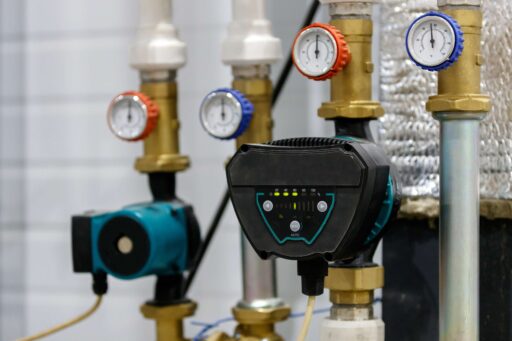
A fixed-speed pump runs at one set speed whenever it’s switched on. It delivers a consistent output, with the system managing any changes in demand through valves, controls, or design.
A variable-speed pump can adjust its speed based on the system’s needs. Using a variable speed drive (VSD), the pump can increase or decrease its output in real time.
Think of it like driving a car.
A fixed-speed pump is like keeping your foot at the same pressure on the accelerator.
A variable-speed pump adjusts depending on the road ahead.
If demand constantly changes, that flexibility can make a big difference.
When Should You Choose a Variable-Speed Pump?
Variable-speed pumps are ideal for systems where demand isn’t always the same.
Instead of running at full speed and wasting energy when less output is needed, they slow down and match the actual requirement.
Common examples include:
- Commercial heating and cooling systems
- Water booster systems in buildings with changing occupancy
- Applications with multiple zones or fluctuating demand
- Systems that operate for long periods throughout the day
The biggest benefits are:
Lower energy costs
Pump speed has a huge impact on energy use. By reducing speed when demand drops, variable speed pumps can significantly cut running costs over time.
Better system control
Rather than constantly switching between too much and too little output, the pump can maintain a more consistent pressure or flow.
Less stress on components
Smoother starts and reduced operating speeds can help reduce wear on parts such as motors, seals, and bearings.
For systems that regularly experience changing demand, the savings and performance improvements can quickly add up.
When Does a Fixed-Speed Pump Make More Sense?
Variable speed might sound like the obvious choice, but fixed-speed pumps are still widely used for a reason.
They’re reliable, straightforward, and often the most practical option.
Fixed-speed pumps are a good fit when:
- Demand stays relatively consistent
- The system is simple
- The pump runs at a similar output most of the time
- Keeping things easy to maintain is a priority
The advantages are simple:
Straightforward operation
With fewer controls and components, fixed-speed pumps are easy to understand, install, and maintain.
Lower upfront cost
Without additional variable speed technology, fixed-speed pumps can often provide a more cost-effective solution.
Proven reliability
For many applications, there’s no benefit in adding extra complexity if the system doesn’t need it.
If a pump is already operating close to full capacity most of the time, a variable speed option may add cost without delivering meaningful savings.
Are Variable-Speed Pumps Always More Energy Efficient?
This is where things can get a little misunderstood.
Variable-speed pumps can be more efficient, but only when the system allows them to be.
If demand changes regularly, reducing pump speed can deliver impressive energy savings.
However, if the pump is always required to run at full output, there’s little opportunity for those savings to happen.
It’s also worth remembering that the pump is only one part of the system.
Issues such as:
- Incorrect pump sizing
- Poor pipework design
- Inefficient controls
- Incorrect system setup
can all affect performance.
It’s worth saying that a variable-speed drive isn’t a magic solution that fixes an inefficient system. It’s a tool that works best when the whole system has been designed correctly.
How Do You Choose the Right Pump?
Before deciding between variable and fixed speed, ask yourself a few simple questions:
Does your demand change throughout the day?
If yes, variable speed could help improve efficiency and control.
Is the pump running continuously?
Long operating hours with changing demand are where variable speed systems often provide the biggest benefits.
Is simplicity more important than flexibility?
For straightforward applications, a fixed-speed pump may be all you need.
Has the whole system been considered?
The right pump choice depends on the complete setup, not just the pump itself.
Looking at the bigger picture will help you avoid paying for features your system won’t use.
So, Which Is Better?
There’s no universal winner when it comes to variable-speed vs fixed-speed pumps.
Variable-speed pumps can be a fantastic option for systems where demand changes regularly, helping improve efficiency, control, and long-term performance.
Fixed-speed pumps continue to be the right choice for many applications where reliability, simplicity, and cost matter most.
The best pump isn’t always the most advanced one. It’s the one that fits your requirements.